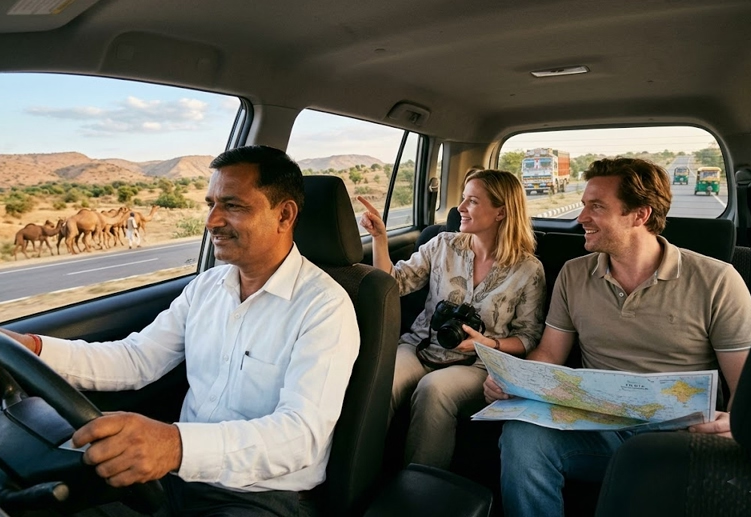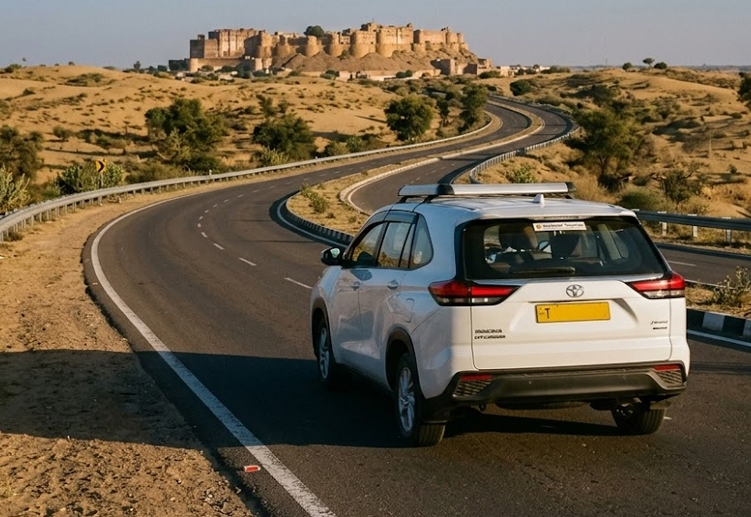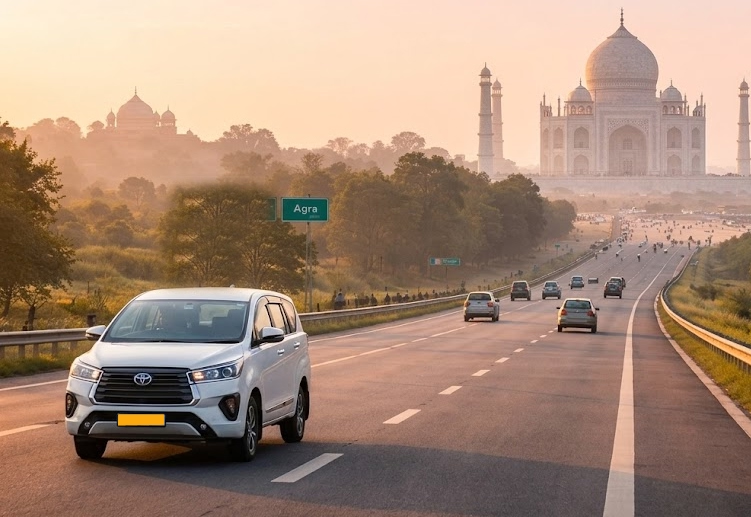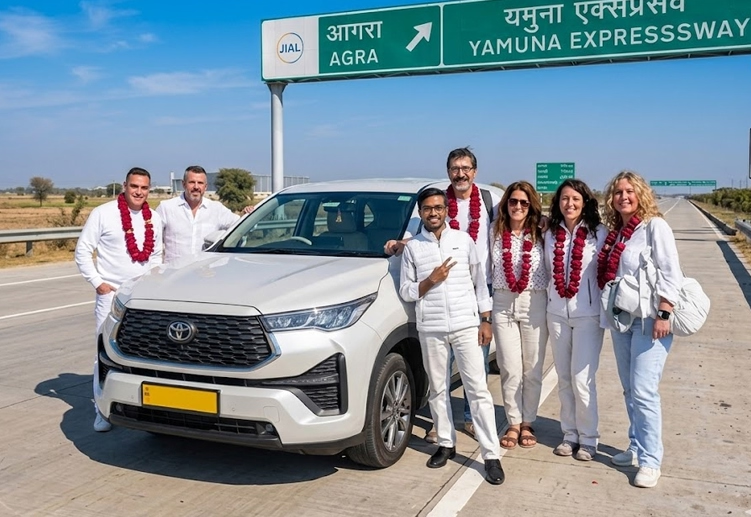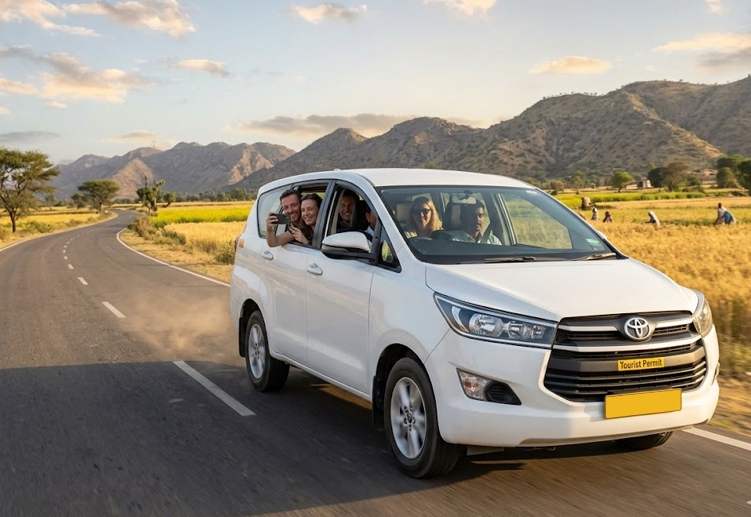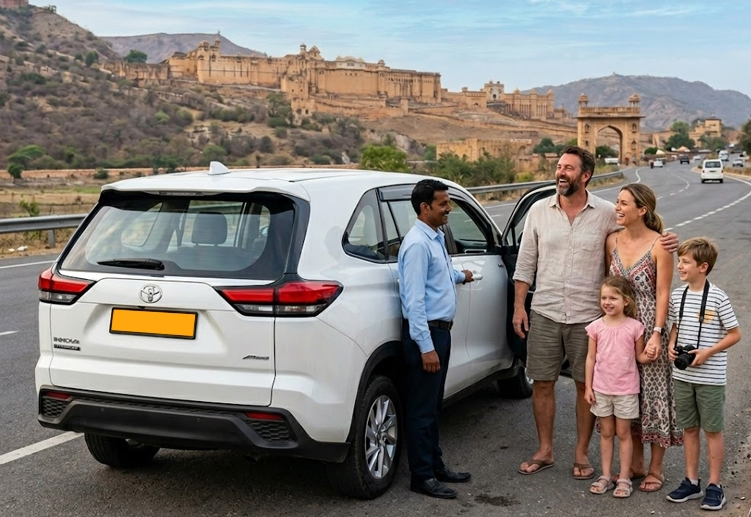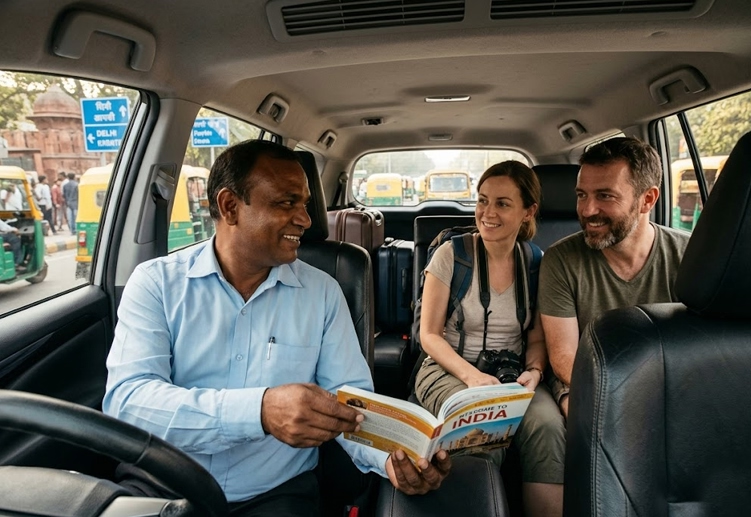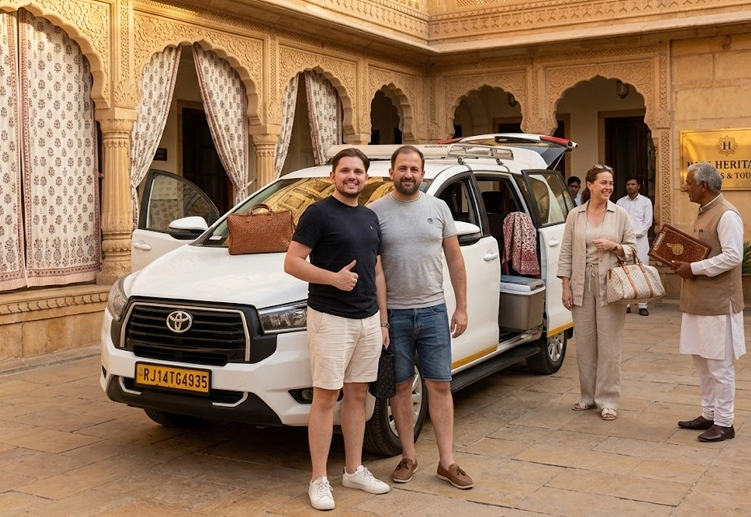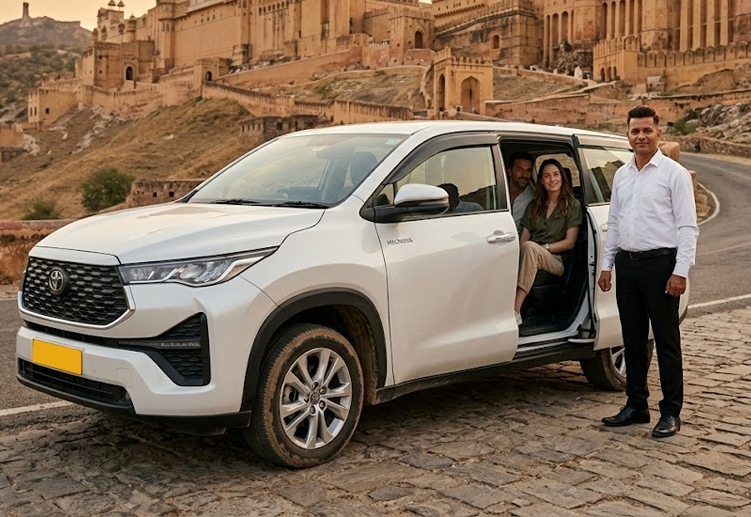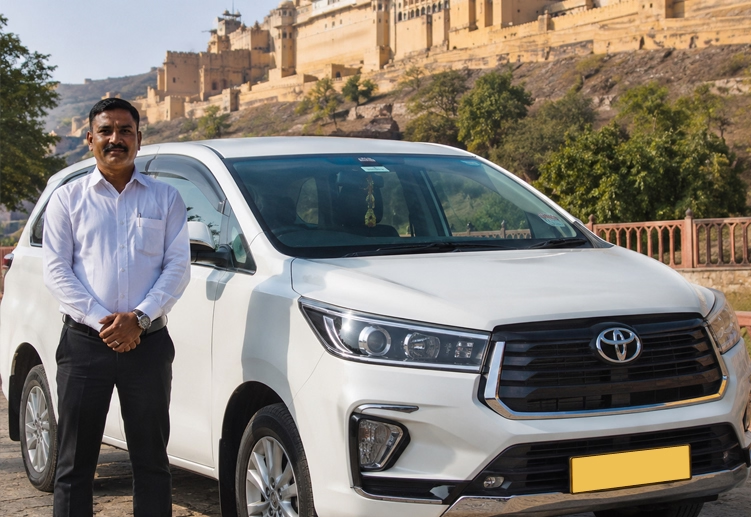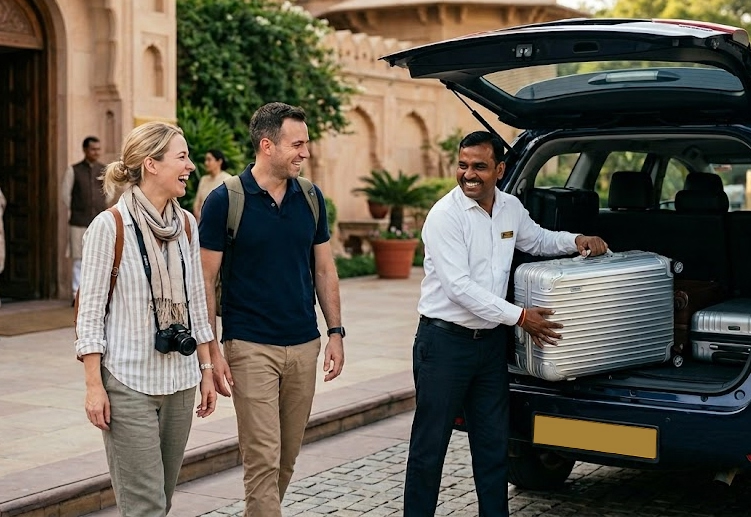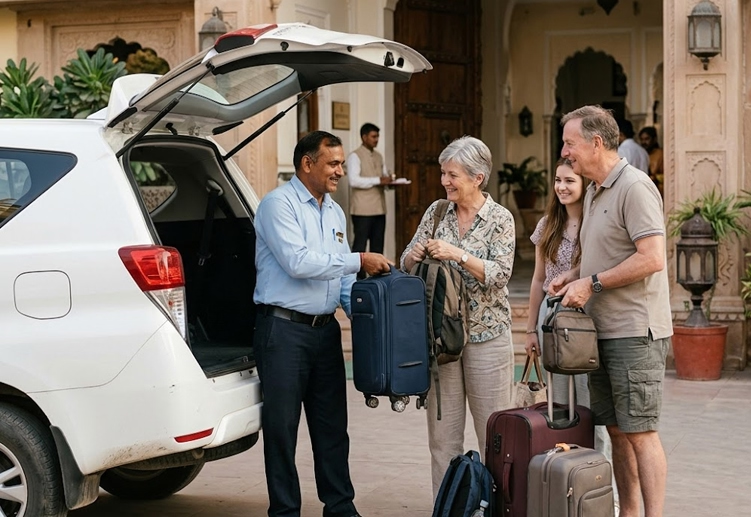


An India road trip is not simply a way to travel from one famous monument to another. For Australian travelers, it can become one of the most memorable ways to understand the country because so much of India happens between the destinations. One morning you may leave the wide avenues of Delhi, pass busy towns and agricultural land, stop for tea beside a highway and arrive in Agra for an evening view of the Taj Mahal. A few days later, the same vehicle may carry you through Rajasthan where hilltop forts, desert landscapes, colourful markets and old trading towns completely change the character of the journey.
Australians are usually comfortable with the idea of a road trip. Long distances, early departures and hours in a vehicle are familiar parts of travelling at home. India, however, requires a different approach. India drives on the left, which initially sounds reassuring, but traffic behaviour, road density and travel speeds can be very different from Australia. Motorcycles move through narrow spaces, pedestrians cross busy streets, buses and trucks share highways with smaller vehicles, animals occasionally appear on the road and a distance that looks short on a map can take longer than expected.
That difference is exactly why a private driver in India is such a practical option for international visitors. You still get the independence of a private road trip, but you do not need to spend each day concentrating on unfamiliar traffic, parking, local navigation and highway conditions. Your luggage stays with you, hotel-to-hotel transfers become easier and sightseeing can be organised around your own pace rather than a large group schedule.
A well-planned road journey can connect Delhi, Agra and Jaipur before continuing into Pushkar, Jodhpur, Udaipur, Ranthambore or other Rajasthan destinations. Longer holidays can combine road travel with trains or domestic flights, allowing Australians to experience more of India without spending excessive time on unnecessary long-distance drives.
This complete guide covers the questions that matter before booking: the best road-trip routes, private driver versus self-drive, realistic driving times, vehicle choices, costs, entry preparation, safety, weather, accommodation, food, money, connectivity, cultural differences, family travel, senior travel, common mistakes and practical itinerary ideas. The goal is not to fit the maximum number of cities into one trip. It is to build a comfortable route that lets you actually enjoy India.
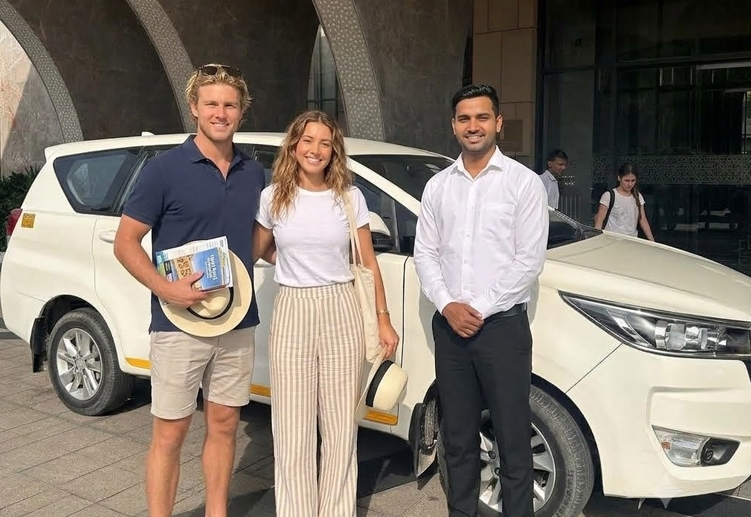
India Road Trip Planning at a Glance
If this is your first visit, keeping the route focused is more useful than trying to see the whole country. Delhi, Agra, Jaipur and Rajasthan form one of India's strongest road-trip regions because the destinations connect naturally and offer very different experiences without requiring flights between every stop.
- Best first route: Delhi – Agra – Jaipur.
- Ideal first-trip duration: Around 7–10 days for the Golden Triangle and roughly 12–16 days when adding Rajasthan.
- Comfortable travel style: Private air-conditioned vehicle with an experienced driver.
- Popular Rajasthan extensions: Pushkar, Jodhpur, Udaipur and Ranthambore.
- Best general season for North India: October through March, while remembering that winter fog can affect travel.
- Best driving rhythm: Longer transfers in daylight, with early or morning departures.
- Vehicle choice: Select by passengers plus luggage, not passengers alone.
- Booking priority: Confirm route, vehicle, inclusions and payment terms in writing.
Why India Works So Well as a Road Trip Destination
India is a huge country, so it is better understood as a collection of regional road trips rather than one continuous drive. North India is particularly suitable because globally recognised landmarks sit within a practical network of heritage cities. Delhi offers centuries of political and architectural history, Agra provides the Taj Mahal and Mughal heritage, Jaipur introduces Rajasthan's royal culture and the route can then continue deeper into the state.
Road travel also reveals details that disappear when every journey happens through airports. Outside the major cities you may pass mustard fields, vegetable markets, roadside shrines, village schools, camel carts, tractors, local restaurants, wedding processions and small towns that never appear on a normal sightseeing list. These moments are rarely attractions in themselves, yet together they often become an important part of understanding India.
Door-to-door convenience is another advantage. A flight that appears to take one hour can involve an airport transfer, early check-in, security, baggage collection and another transfer at the destination. On geographically sensible routes, a private vehicle can turn the same period into a direct journey from one hotel to the next while giving you the possibility of stopping at a worthwhile site along the way.
The biggest advantage is flexibility. If you are tired after flying from Australia, the following morning can begin later. If an attraction takes longer than expected, your day does not have to end because a tour bus is leaving. If you want to stop for tea, photography or lunch, a private road trip can usually accommodate it. That flexibility becomes especially valuable during a two-week journey.
India Entry Planning for Australian Travelers
Entry requirements are one part of the trip that should always be verified from official sources close to departure. Australian citizens need appropriate permission to enter India, normally a valid visa or relevant OCI status. Travelers should use the Government of India's official visa and immigration information rather than relying on third-party websites that may look official.
Arrival procedures can also change. The safest planning habit is to check both current Indian government requirements and Australian Government travel advice shortly before leaving Australia, even if your main visa arrangements were completed several months earlier.
Before Leaving Australia
- Check passport details carefully. The name and passport number on travel documents should match your passport exactly.
- Use official visa sources. Be cautious with commercial websites that imitate government portals.
- Keep printed and digital copies. Store passport, visa, insurance, hotel and driver confirmations securely.
- Arrange comprehensive travel insurance. Read the policy rather than assuming every road or activity is automatically covered.
- Check current travel advice. Advice levels can vary between Indian regions.
- Share your itinerary. Leave your main hotel and transport details with someone at home.
- Keep emergency contacts offline. Do not rely entirely on mobile data being available.
It is sensible to book flights and accommodation early, particularly when Australian school holidays or popular Indian travel months overlap. Administrative requirements, however, deserve a final check immediately before departure because rules can change after a holiday has been booked.
Arriving in India After a Long Flight from Australia
Your first day can shape the entire journey. International travel from Australia means long airport time, possible connecting flights, immigration, baggage collection and a significant change in surroundings. It is rarely a good idea to land and immediately begin a demanding full-day intercity itinerary.
If Delhi is your arrival point, use the first day for airport transfer, hotel check-in, rest and perhaps one or two easy local experiences. Starting the main road trip the following morning allows you to travel in daylight and gives your body time to adjust.
For airport pickup, confirm the meeting location before departure from Australia. Save the driver's name, company contact details and WhatsApp number. If immigration or baggage takes longer than expected, direct communication makes the arrival much easier.
A pre-arranged transfer is especially useful for first-time visitors because large airports can be tiring after a long flight. Instead of looking for transport while carrying luggage, you can meet the planned driver and go directly to the hotel.
Self-Drive or Private Driver: What Is Better in India?
Australians are accustomed to driving long distances and India also drives on the left, so self-driving can initially seem like the obvious road-trip choice. The important distinction is that driving on the same side of the road does not mean the road environment is the same.
Licensing, insurance and rental requirements must be checked before self-driving. Even when you have the required documentation, practical conditions remain the bigger question. Urban traffic can involve dense flows of motorcycles, auto-rickshaws, pedestrians, buses and cars, while highways can include trucks, tractors, livestock and slower-moving vehicles.
A professional driver removes much of that mental workload. You can look at the scenery, speak with your travel companion, plan the next stop or simply rest. For a multi-city journey, having the same vehicle also avoids arranging a new taxi or transfer every time you change hotels.
Private Driver Advantages
- Local driving patterns and city congestion are handled by someone familiar with them.
- You can focus on the journey rather than navigation and parking.
- Your luggage travels in the same vehicle between hotels.
- Meal, rest and photography stops can be planned more naturally.
- Airport and railway-station transfers become easier to coordinate.
- Families can organise stops around children rather than fixed group schedules.
- Older travelers can reduce unnecessary walking between transport points.
- Multi-city routes become one continuous itinerary.
Self-driving may appeal to experienced international drivers who specifically want that challenge, but it should not be chosen simply because it is your normal travel style in Australia. A private-driver journey still provides independence while allowing you to spend your energy on the holiday itself.
Understanding Indian Roads Before You Travel
One of the most important differences between an Australian and Indian road trip is the relationship between distance and time. A 250-kilometre journey in Australia may be easy to estimate. In India, city congestion, roadworks, toll plazas, busy towns, weather, slower traffic and road conditions can make the same distance much less predictable.
Mapping apps are useful, but the fastest estimated time should not become the foundation of a tightly scheduled itinerary. Build additional time for meals, toilets, traffic and sightseeing stops. If a route already looks long before those breaks are included, the day is probably too ambitious.
Day Driving Is Usually the Better Choice
Long intercity transfers are generally more comfortable when completed during daylight. Visibility is better and you avoid turning a full sightseeing day into an exhausting late-night drive.
A practical routine is to eat breakfast, leave in the morning and aim to reach the next hotel with enough daylight remaining to check in comfortably. This does not mean every journey must begin at dawn. It simply means the itinerary should respect realistic travel time.
Realistic Driving Times Matter More Than Distance
Travelers frequently look at the number of kilometres between two Indian cities and assume the trip will feel similar to driving the same distance at home. That approach often creates an itinerary that looks excellent on paper but becomes tiring after several days.
Delhi to Agra is a logical road transfer. Agra to Jaipur is also a well-established tourist route. Jaipur to Jodhpur or Jodhpur to Udaipur can work comfortably when treated as genuine transfer days rather than small gaps between two full sightseeing programmes.
The smartest itinerary asks two questions for every transfer: how long will the journey realistically take with breaks, and how much sightseeing do we expect before or after it? If both answers are large, remove something.
One meaningful stop during a transfer can make the day more interesting. Three or four detours can turn the same day into a race. Road travel becomes enjoyable when the route has a rhythm rather than a checklist.
The Best First India Road Trip: Delhi, Agra and Jaipur
For a first India trip from Australia, the Golden Triangle remains one of the strongest introductions because the three cities are connected naturally yet offer very different experiences.
Delhi provides an immediate sense of India's scale. Old Delhi's historic lanes, markets and monuments contrast with the broader avenues of New Delhi. With enough time, the city deserves two nights or more rather than being treated only as an airport.
Agra is famous for the Taj Mahal, but Agra Fort and other Mughal sites add important historical context. Staying overnight gives you more flexibility than trying to squeeze the Taj Mahal between two long drives.
Jaipur changes the atmosphere again with Amber Fort, City Palace, Jantar Mantar, Hawa Mahal, bazaars, crafts and Rajasthan's distinctive architecture. Two or three nights provide a much better experience than one rushed sightseeing day.
Travelers who want an established starting point can compare our Golden Triangle tours and customise the route around their flights, interests and available time.
A Comfortable 7-Day Golden Triangle Road Trip
- Day 1: Arrive in Delhi, transfer to the hotel and keep the day light.
- Day 2: Explore Old Delhi and New Delhi.
- Day 3: Drive Delhi to Agra and visit Agra Fort or an evening viewpoint.
- Day 4: Visit the Taj Mahal and continue toward Jaipur with an optional heritage stop.
- Day 5: Explore Amber Fort and Jaipur's main heritage attractions.
- Day 6: Continue Jaipur sightseeing, markets, crafts or a slower local day.
- Day 7: Return toward Delhi or continue to the next part of your holiday.
Seven days works if leave is limited, but nine or ten days is noticeably more comfortable. An extra day in Delhi or Jaipur and a slower start after arrival can make the itinerary feel like a holiday rather than a race.
Extending Your Road Trip into Rajasthan
If the Golden Triangle introduces North India, Rajasthan transforms the itinerary into a true multi-city road journey. Historic towns are separated by landscapes that continually change, and the routes between them are part of the experience.
From Jaipur, Pushkar provides a smaller-town atmosphere centred around its sacred lake and ghats. Jodhpur follows with Mehrangarh Fort and the blue-painted neighbourhoods associated with the old city. Udaipur then provides lakes, palace architecture and a more relaxed final stage.
Travelers with additional time can consider Ranthambore, Bundi, Bikaner, Jaisalmer, Mandawa and rural heritage properties. The key is selection. Rajasthan looks compact on a map compared with Australia, but trying to include every famous city will create repetitive hotel changes and too many transfer days.
A Comfortable 14-Day Golden Triangle and Rajasthan Route
- Days 1–2: Delhi sightseeing and recovery from international travel.
- Day 3: Delhi to Agra.
- Day 4: Taj Mahal and Agra sightseeing, then continue toward Jaipur.
- Days 5–6: Jaipur.
- Day 7: Jaipur to Pushkar.
- Day 8: Pushkar to Jodhpur.
- Days 9–10: Jodhpur.
- Day 11: Jodhpur to Udaipur with an optional heritage stop en route.
- Days 12–13: Udaipur.
- Day 14: Fly onward or continue according to your international itinerary.
For more route inspiration, compare our Rajasthan tour packages. An established route can be useful even if you later customise it because it shows which destination combinations make geographical sense.
Should You Add Jaisalmer to the Road Trip?
Jaisalmer is one of Rajasthan's most distinctive destinations, but it deserves special consideration because it sits farther west than cities such as Jaipur, Jodhpur and Udaipur. Adding it simply because it appears on every Rajasthan bucket list can make a short itinerary unnecessarily long.
For a two-week trip, decide whether desert landscapes are a priority. If they are, give Jaisalmer enough time to justify the additional road distance. If not, a route through Jaipur, Pushkar, Jodhpur and Udaipur may feel more balanced.
Longer three-week itineraries can include Jaisalmer more naturally. The extra days allow you to stay more than one night instead of spending a large proportion of the holiday getting there and leaving again.
How Long Should an Australian Traveler Spend in India?
India is a long journey from Australia, so spending only a few nights in the country can feel disproportionate to the international travel involved. Around ten days on the ground is a useful starting point for a meaningful first visit, while two weeks opens significantly more possibilities.
Seven days can cover Delhi, Agra and Jaipur. Nine or ten days allows a more comfortable Golden Triangle with additional rest. Around 12 to 16 days works well for the Golden Triangle plus several Rajasthan destinations. Three weeks allows the pace to slow further or provides enough time to add another region using a domestic flight.
More destinations do not automatically create better value. In a country as stimulating as India, slower days can become essential. A morning without an alarm, an evening walk, a long lunch or time to browse a market can provide useful recovery between major sightseeing days.
Best Time for Australians to Take an India Road Trip
For Delhi, Agra, Jaipur and much of Rajasthan, October through March is generally the most comfortable road-trip period. Temperatures are more suitable for long days at forts, palaces and markets than during the hottest part of the year.
October and November can provide warm days. December and January are cooler, particularly early in the morning and at night. Australians leaving summer weather at home are sometimes surprised by how cold a North Indian winter morning can feel.
Winter also brings the possibility of fog in parts of northern India. Road, rail and flight schedules can be affected, which is why a tight same-day transfer immediately before an international flight is not ideal.
February and early March can be excellent for Rajasthan. As March progresses, temperatures usually rise. April, May and June can be extremely hot, making sightseeing more tiring and increasing the value of early starts, air-conditioned vehicles and midday breaks.
Monsoon conditions vary across India, but heavy rain can affect roads and travel times. If travelling during wetter months, keep the schedule more flexible and follow current forecasts.
Choosing the Best Month Around Australian Holidays
Australian travelers often plan around Christmas, New Year, Easter or school-holiday periods. The weather in India may be completely different from the season you are leaving at home, so pack for the destination rather than the Australian calendar.
December and January can be attractive for Rajasthan because daytime sightseeing is generally more pleasant than in extreme summer heat, but mornings can be cool and fog may affect northern transport. If travelling during a popular holiday period, book preferred hotels and specialised experiences earlier.
For couples or adults travelling outside school holidays, February can offer an appealing balance for many North India routes. Whatever month you select, local weather should be checked again shortly before the trip.
How Much Does an India Road Trip Cost?
India can provide strong value for Australian travelers, but a single universal road-trip price would be misleading. Transport cost depends on the vehicle, total kilometres, number of travel days, route, tolls, parking, interstate charges, driver allowance and whether the car must return to its original city after your trip ends.
A couple using a sedan will naturally have a different transport budget from a family requiring a larger SUV or MPV. A group using a Tempo Traveller is another category again. Accommodation can range from simple guesthouses to premium international hotels and historic palace properties.
Ask What the Private-Driver Quote Includes
- Exact vehicle category.
- Passenger and luggage capacity.
- Fuel for the agreed itinerary.
- Driver services and allowance.
- Highway tolls.
- Parking charges.
- Interstate taxes or permits where applicable.
- Airport and railway-station transfers included in the itinerary.
- Daily kilometre allowance if one applies.
- Rate for additional kilometres.
- Driver accommodation arrangements.
- Any late-night or waiting charges.
Do not compare two transport companies only by the first number they send. A low headline rate can become more expensive after tolls, parking, driver costs and taxes are added. An itemised quotation makes comparison much easier.
Accommodation is where travelers have the most control over budget. A smart approach is to combine comfortable mid-range hotels with one or two memorable heritage stays rather than paying for a luxury property every night.
Monument tickets, local guides, meals, tips, shopping and optional experiences should be treated as separate parts of the holiday budget. Entry fees can change, so verify current prices shortly before travel instead of building the entire budget around an old blog or screenshot.
How to Get Better Value Without Making the Trip Cheap
Saving money and reducing quality are not the same thing. The best-value itinerary spends on the details that influence every day and saves where upgrades provide little practical benefit.
A larger, more comfortable vehicle can be worth more than a slightly more luxurious hotel room when you have several long road days. Similarly, a well-located hotel may be more valuable than a cheaper property far outside the city if the difference means spending another hour in traffic each day.
Try not to change hotels simply to save a small amount. Every move involves packing, checkout, luggage handling, another journey and check-in. Staying two nights in one place can improve the experience even when the nightly rate is a little higher.
Choosing the Right Vehicle for Your India Road Trip
Vehicle choice is one of the most underestimated parts of road-trip planning. A car that seems large enough for a 30-minute airport transfer can feel very different when passengers and luggage are inside it for five or six hours.
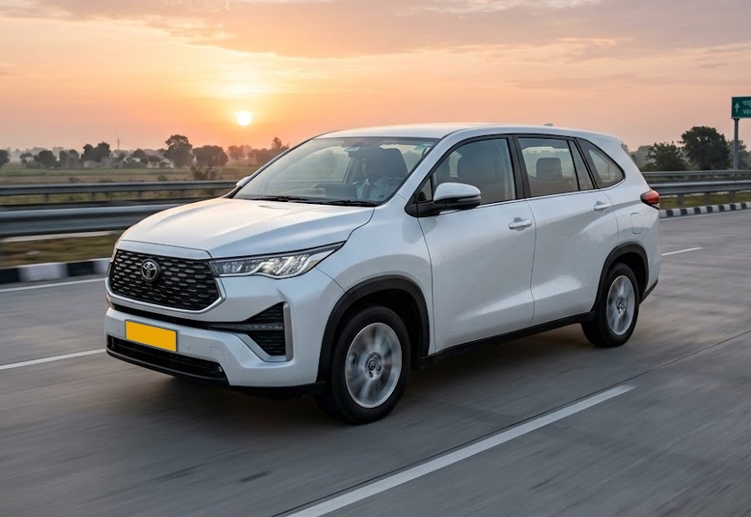
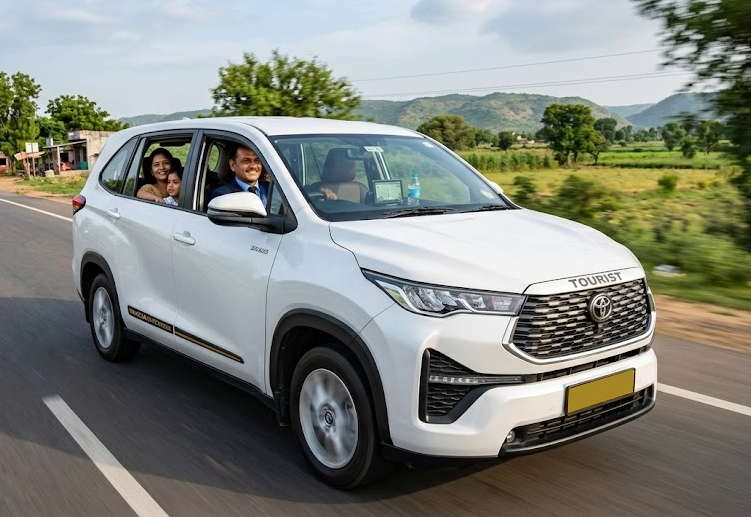
Couples with moderate luggage may find a sedan sufficient. Families and small groups often appreciate the extra space of an SUV or MPV. Larger groups generally require a Tempo Traveller rather than multiple tightly packed cars.
When enquiring about car rental with a driver in India, tell the operator both the number of travelers and the approximate number and size of suitcases. International visitors often carry more luggage than domestic travelers, so boot space matters.
Questions to Ask Before Confirming a Vehicle
- Is the vehicle fully air-conditioned?
- How much luggage can it carry without using passenger seats?
- Is the quoted model guaranteed or described as a similar vehicle?
- Are passenger seat belts available?
- Is the vehicle suitable for several consecutive long-distance days?
- What is the replacement procedure if the vehicle develops a mechanical problem?
- Does the quotation cover the full planned route?
Extra space becomes more valuable as the trip becomes longer. On a two-week itinerary, comfort during every transfer can have a bigger impact on the holiday than a small difference in transport price.
What a Good Private Driver Does—and Does Not Do
A professional private driver is primarily responsible for transport. Experienced drivers may also understand tourist routes, practical departure times, hotel access, sensible meal stops and the realities of local traffic. They can make the logistical side of the holiday much easier.
A driver, however, is not automatically a licensed local guide. If you want detailed historical interpretation inside major monuments, arrange a qualified guide in the relevant city. This division works well: the driver manages the road and transport while the guide concentrates on the destination.
Communication matters. Tell the driver or company if you prefer vegetarian food, want to avoid shopping stops, need frequent breaks, are travelling with children or have mobility considerations. Private travel is most useful when the itinerary reflects the people actually taking the trip.
A reliable driver should respect the agreed route, drive responsibly, keep the vehicle reasonably clean and avoid pressuring travelers into unwanted shops or activities. If shopping is part of your holiday, choose it because you are interested rather than because the sightseeing day has been redirected without explanation.
English-Speaking Drivers and Communication
Many Australian visitors prefer an English-speaking driver because communication affects much more than conversation. You need to be able to agree on pickup times, meal breaks, hotel locations, sightseeing duration and changes to the day's plan.
English ability can vary, so ask about it when booking if fluent communication is particularly important to you. WhatsApp is also useful for sending hotel map pins, confirming morning departure times and staying connected when the driver is waiting away from a monument entrance.
Clear communication at the beginning prevents many small frustrations later. If you prefer quiet driving time, say so. If you want local suggestions, ask. There is no single correct private-driver experience; the best one matches your travel style.
Safety Tips for Australian Travelers on Indian Roads
Hiring a private car does not remove the need for normal travel precautions. Current government travel advice should be checked for every region on your route, particularly because advice levels can differ within India.
Keep valuables out of obvious view and avoid carrying more cash than necessary. Store passport and insurance backups securely. Save essential phone numbers offline so they remain available even if your mobile connection is temporarily unavailable.
Long-distance night driving is best minimised where practical. Build transfer days around daylight and avoid creating an itinerary in which the driver has to begin a five-hour journey after a full day of sightseeing.
Use seat belts whenever available. Families travelling with children should discuss child-restraint requirements and availability before arrival instead of assuming every vehicle carries suitable equipment.
If demonstrations, severe weather or local disruption affect your route, follow current official information and local instructions. India is enormous, so an issue in one region may have no effect on another, but conditions should always be checked rather than assumed.
Advice for Women Traveling in India
Women traveling in India can have an excellent experience, including solo travelers, friends and mothers travelling with family, but normal personal-safety planning remains important. Use reputable transport, communicate hotel and pickup details clearly and avoid unnecessary isolated travel late at night.
If travelling alone, tell the transport company in advance and keep your accommodation details accessible. Meeting a known driver at an airport or hotel can remove the need to negotiate transport after dark.
Clothing does not need to be overly restrictive, but having modest options is useful for religious sites and more conservative areas. A light scarf can be practical for temples, sun and air-conditioned spaces.
Food and Water on an India Road Trip
Food can become one of the highlights of travelling across India. Different cities and regions have their own dishes, and road travel gives you access to experiences beyond hotel restaurants. Some judgement, however, helps keep the trip comfortable.
Choose freshly prepared food from busy establishments with good turnover. Drink sealed bottled water or appropriately treated water and keep a supply in the vehicle, especially during hot weather.
Vegetarian travelers generally find India easy because vegetarian meals are widely available. Travelers with serious allergies should communicate them clearly and consider carrying a written explanation because casual terms such as "no nuts" can sometimes be interpreted differently from a medically serious allergy.
If you enjoy spicy food, remember that the meaning of "medium" varies. Starting with milder dishes and increasing the spice level gradually is often easier than spending the first few days testing your limits.
Roadside chai can be a memorable part of the journey. A good driver can often suggest established stops used by travelers while avoiding places that are impractical for international visitors.
Money, Cards and Cash While Travelling by Road
Cards and digital payments are common in major Indian cities, but carrying some cash remains useful for smaller shops, local markets, tips and roadside expenses. International-card ATM availability is generally better in larger cities than remote areas.
Travel with more than one payment method. A backup card stored separately can save considerable difficulty if the primary card is blocked or lost.
Avoid carrying unnecessarily large amounts of cash. Withdraw sensible amounts and keep backup funds secure. When exchanging or withdrawing money, check fees and conversion rates before confirming the transaction.
Small rupee expenses can feel insignificant when mentally converted into Australian dollars, but they accumulate across a two-week holiday. Monument tickets, guides, meals, snacks, tips and shopping can collectively become a meaningful part of the budget.
Tipping in India for Australian Travelers
Australians are used to a different tipping culture, so India can initially feel unclear. Tips are more common in parts of the tourism and hospitality sector, including for drivers, guides, hotel staff and restaurant service.
There is no need to treat every interaction as a compulsory transaction. The amount depends on the service, duration and circumstances. For a multi-day private driver, it is often easiest to ask your tour operator for current guidance and then decide based on the service you actually receive.
Keep small notes available for everyday tipping so you are not constantly trying to break large denominations.
Mobile Data, Navigation and Staying Connected
Mobile connectivity makes an India road trip easier than it was only a few years ago. You can communicate with the driver, share hotel map pins, check attraction information, use translation tools and keep family in Australia updated.
Before departure, compare your Australian carrier's roaming options with local connectivity or travel eSIM choices. Coverage is usually strong around major cities and tourist routes, but remote areas can still have weaker reception.
Download offline maps before long travel days. Even when someone else is driving, being able to see your location helps you understand the route and estimated remaining distance.
Save hotel addresses and confirmations offline. Hotels in Indian cities sometimes have similar names, so sending the exact map location to your driver can prevent confusion.
Power, Charging and Electronics
A phone becomes an important travel tool for maps, bookings, photographs and communication, so keep a power bank in your day bag. Charging cables can easily disappear into the main suitcase on transfer days, so keeping one cable permanently in the day bag is useful.
Carry a suitable universal travel adapter for your devices. Do not assume an Australian plug will fit hotel sockets. If you travel with several electronics, a compact multi-port USB charger can reduce the number of adapters required.
Keep important bookings stored locally rather than depending entirely on cloud access. Screenshots of hotel names, flight details and driver contact numbers can solve problems when data is weak.
Where to Stay on a Road Trip Through North India
The most luxurious hotel is not automatically the best road-trip hotel. Location, vehicle access and convenience can matter just as much as the room.
In Delhi, consider the relationship between your hotel, airport and sightseeing areas. In Agra, location can be important if you plan an early Taj Mahal visit. Jaipur offers everything from modern international hotels to restored havelis. Smaller Rajasthan destinations can provide some of the most memorable heritage stays of the entire trip.
Ask whether the property has normal vehicle access if it is located inside an old city. A beautiful guesthouse deep in a narrow pedestrian lane may offer atmosphere but make early departures with multiple suitcases less convenient.
Avoid changing hotels within the same city unless there is a strong reason. Packing and moving can consume half a day even when the new property is nearby.
Heritage Hotels: Where a Road Trip Becomes Special
Rajasthan is particularly well known for havelis, forts, palaces and historic properties converted into accommodation. Including one or two heritage stays can give the road trip a stronger sense of place without requiring luxury accommodation every night.
Heritage properties vary enormously. Some are polished premium hotels, while others prioritise atmosphere and character over modern facilities. Read recent reviews carefully if particular comforts are important to you.
For many couples, one memorable palace or haveli night provides better value than upgrading every hotel on the itinerary.
Planning Taj Mahal Day Correctly
The Taj Mahal is likely to be one of the most anticipated parts of a first trip to India, so plan the day carefully. Opening arrangements, closure days, ticket procedures and seasonal sunrise times should be checked close to your visit.
Staying overnight in Agra gives you more control than trying to visit the Taj Mahal during a rushed Delhi-to-Jaipur transfer. You can plan the monument at a suitable time, return for breakfast or rest and combine it with Agra Fort without making every minute dependent on the highway.
Travelers with very limited time can choose one of our same-day tours. If you already have a longer road-trip itinerary, however, slowing down in Agra often provides a better experience.
Keep photography in perspective. The Taj Mahal is one of the most photographed buildings in the world, but spending the entire visit searching for the perfect empty frame can distract from actually seeing it. Allow time simply to walk, observe the changing light and understand the scale of the complex.
Jaipur: Why It Deserves More Than One Day
Jaipur is sometimes treated as the third box on a Golden Triangle checklist, but it can easily justify two or three full days. Amber Fort, City Palace, Jantar Mantar, Hawa Mahal, bazaars and craft traditions cover different parts of the city and surrounding area.
Trying to combine every attraction in one short day usually creates more time in traffic and less time actually exploring. A private Jaipur sightseeing tour can cover the main highlights efficiently, while an additional day can focus on markets, food, crafts or a slower schedule.
Jaipur is also a practical base for regional excursions. Pushkar, Ajmer, Abhaneri and other attractions can fit into a wider Rajasthan itinerary depending on your interests.
Wildlife Extensions: Ranthambore and Road-Trip Planning
Ranthambore National Park is a popular wildlife extension to a Golden Triangle or Rajasthan trip. It can fit geographically, but safari planning is different from normal city sightseeing because entry is connected to scheduled safari arrangements.
Do not plan to arrive at the last possible moment before a safari. Stay near the park and provide enough transfer time the previous day. Wildlife sightings are never guaranteed, so approach the experience as an opportunity to explore the landscape and see a range of wildlife rather than a guaranteed tiger encounter.
Travelers considering a short extension can review a Jaipur to Ranthambore trip, although longer itineraries often benefit from an overnight stay.
Should You Add Varanasi, Mumbai or Goa?
A common planning mistake is assuming that once you have a private driver, every destination should be reached by road. India is too large for that to make sense.
Delhi, Agra, Jaipur and Rajasthan form a strong regional road network. Varanasi, Mumbai, Goa and South India are much farther away. Domestic flights or suitable train journeys can connect those destinations more efficiently.
For example, you can complete a private road trip through North India, fly to Mumbai or Varanasi and then begin a separate local itinerary. This protects valuable holiday days that would otherwise be spent on very long highways.
What to Pack for an India Road Trip from Australia
Packing should reflect both the season and the practical reality that your luggage will move through several hotels. You do not need specialist expedition gear, but a few carefully chosen items make daily travel easier.
- Comfortable walking shoes: Forts, old cities and monuments often involve uneven surfaces and stairs.
- Light layers: Useful for cool mornings, warmer afternoons and air-conditioned vehicles.
- Sun protection: Sunscreen, sunglasses and a hat are useful for long outdoor sightseeing days.
- Reusable day bag: Keep water, tissues, medication and small essentials together.
- Power bank: Useful for maps, photography and long transfer days.
- Prescription medication: Carry sufficient supply plus appropriate documentation.
- Modest clothing: Useful for temples and religious sites.
- Small umbrella: Useful during rain and sometimes as sun protection.
- Travel adapter: Carry a suitable universal power solution for Australian electronics.
- Offline document copies: Passport, visa, insurance, hotel and transport details.
- Small hand sanitiser and tissues: Useful on long road days.
- Light scarf: Practical for religious sites, sun and cool interiors.
Avoid filling your suitcase to the airline limit before departure. Moving very heavy luggage repeatedly becomes tiring, and leaving some space gives you room for textiles, crafts or other purchases.
Cultural Differences Australian Travelers Should Expect
India can feel socially more intense than Australia. Crowds may be denser, personal space smaller, streets noisier and markets more energetic. Instead of expecting the environment to behave like home, give yourself time to adapt.
Respect at religious sites matters. Dress appropriately, remove shoes when requested and follow local instructions. Ask before photographing individuals, especially in rural or religious settings.
Bargaining is normal in some markets but not every shop. Keep the process friendly. The small amount you might save after converting the price into Australian dollars is rarely worth creating an unpleasant argument.
Patience is one of the most valuable things to pack. A traffic delay or unexpected closure does not need to ruin the day if the itinerary has enough flexibility.
Photography and Social Media Etiquette
India offers extraordinary photography, from palace architecture to markets and rural landscapes. Not every scene, however, should automatically become a photograph.
Ask permission before taking close photographs of people. Some religious areas restrict photography entirely, while monuments may have different rules for professional equipment, tripods or video.
A private road trip makes spontaneous photography easier because you can occasionally stop at a safe location instead of shooting everything through a bus window. Always let the driver decide whether a roadside stop is safe and legal.
Common India Road Trip Mistakes to Avoid
- Planning by kilometres instead of realistic hours. Road conditions and congestion can make distances misleading.
- Changing hotels every night. Constant packing quickly becomes exhausting.
- Scheduling long drives after full sightseeing days. Use morning departures whenever possible.
- Choosing the smallest possible vehicle. Passenger comfort and luggage space matter on long journeys.
- Assuming the driver is automatically a tour guide. Book local guides separately when detailed interpretation matters.
- Accepting an unclear quotation. Confirm tolls, parking, driver costs, taxes and kilometre limits.
- Leaving no buffer before an international flight. Traffic, fog or other disruption can cause delays.
- Trying to see the whole country in two weeks. Select a region and explore it properly.
- Overplanning every meal and stop. Flexibility is one of the main advantages of private road travel.
- Ignoring seasonal weather. Heat, rain and winter fog can affect comfort and timing.
- Booking only by the cheapest price. Vehicle quality, reliability and service matter across a long journey.
- Not explaining luggage requirements. Passenger capacity does not automatically equal luggage capacity.
A Better Daily Rhythm for an India Road Trip
A successful road-trip day often starts earlier than a typical Australian city holiday. Morning temperatures are usually more comfortable, major attractions may be quieter and daylight gives you more flexibility.
On transfer days, eat breakfast and depart at a sensible morning time. Add one worthwhile stop rather than several rushed detours. Have lunch when convenient and aim to reach the next hotel before late evening.
On sightseeing days, leave some unscheduled space. A market may take longer than expected, traffic may slow down, a monument may deserve more time or you may simply need a break.
Good timing does not reduce independence. It creates it. An early start can help you avoid the busiest part of the day and leave a relaxed evening rather than spending every afternoon trying to recover lost time.
Road Trip Options for Couples, Families and Senior Travelers
Couples
Couples can build a highly flexible route because a sedan or comfortable SUV may be sufficient for passengers and luggage. Rajasthan is particularly suitable for couples who enjoy heritage hotels, rooftop dinners, photography and slower evening experiences. Udaipur is a natural addition for travelers interested in lakeside stays and a more relaxed final stage.
Families
Families benefit from using the same vehicle throughout a multi-city journey. Snacks, children's items, jackets and day bags can remain organised instead of being repeatedly repacked for trains and airports.
Build shorter sightseeing sessions, predictable meal breaks and enough free time. A slightly larger vehicle is often worth the additional cost when children and luggage are involved.
Senior Travelers
Older visitors often appreciate door-to-door transport most. India's forts, palaces and old cities can involve stairs, uneven surfaces and long walks. A private itinerary makes it easier to reduce unnecessary hotel changes and adjust sightseeing duration.
Tell the travel company about mobility considerations before arrival. The route can often be adapted by changing hotel location, vehicle choice, sightseeing order or departure times.
Travelling With Children in India
India can be fascinating for children because every day brings something visually different: forts, animals, colourful markets, trains, palaces and busy streets. The main planning mistake is expecting children to tolerate the same sightseeing intensity as adults.
Choose a vehicle with enough space, keep water and snacks available, schedule toilet breaks and avoid turning every day into an early start followed by late-night arrival.
Build at least one lighter day after several major sightseeing days. A hotel pool, relaxed lunch or short local activity can make the rest of the journey much easier for the whole family.
Should You Combine Trains With a Private Road Trip?
A private driver does not mean every kilometre must be completed by car. Strong itineraries often combine transport modes according to geography.
Road travel is especially effective between Delhi, Agra, Jaipur and Rajasthan destinations. If another city lies hundreds of kilometres away, a train or domestic flight may protect valuable holiday time.
Think of the private vehicle as a regional travel solution rather than a rule. You can finish a North India road trip, fly to another part of the country and arrange local transport there.
This combination is particularly useful for Australians with two or three weeks who want variety without spending several days on very long road transfers.
Booking a Private Driver Before Leaving Australia
Booking before departure gives you time to evaluate the itinerary rather than making a rushed decision after arrival. Send the transport company your flight details, travel dates, planned cities, approximate hotel level, passenger numbers and luggage requirements.
A professional operator should identify unrealistic sections. If your proposed itinerary combines a long drive with an impossible amount of sightseeing, useful advice is more valuable than simply agreeing to the request.
Private Driver Booking Checklist
- Confirm the complete route and number of travel days.
- Confirm the exact vehicle category.
- Provide the number of passengers and suitcases.
- Ask what tolls, parking, taxes and driver expenses are included.
- Confirm airport or railway pickup instructions.
- Ask for the driver's or office WhatsApp contact.
- Confirm payment and cancellation terms.
- Check whether local guides are included or separate.
- Ask about itinerary changes and extra-kilometre charges.
- Keep written confirmation accessible offline.
If someone is meeting you at Delhi Airport, know where the meeting point is and how you will recognise the driver. Small details like this make a major difference after a long international flight.
How to Make the Trip Comfortable Without Overspending
A comfortable India road trip does not require a luxury hotel every night. Spend where it improves the entire day and save where the upgrade adds little.
A more spacious car may be worth more than a premium room if you have multiple long road journeys. A centrally located hotel can be worth more than a larger resort far from the attractions. One memorable heritage stay may provide more value than upgrading every accommodation booking.
Private transport also reduces hidden friction. You are not repeatedly carrying luggage through stations, negotiating taxis or waiting for separate transfers. That convenience has value even before you consider the sightseeing flexibility.
Why a Private Road Trip Can Work Better Than a Group Tour
Group tours can provide excellent value for travelers who enjoy fixed itineraries and travelling with other people. Private road trips appeal to a different style of traveler.
You decide when the day begins, how long to stay at an attraction and when to stop for lunch. Couples do not have to wait for an entire coach group. Families can take breaks when children need them. Senior travelers can slow down without worrying that everyone else is waiting.
The flexibility is particularly useful on a first India trip because it is difficult to predict how you will respond to the pace, weather and sensory intensity until you arrive.
Frequently Asked Questions
Is India good for a road trip for Australian travelers?
Yes. Regional road trips through Delhi, Agra, Jaipur and Rajasthan are especially rewarding because they combine major landmarks with countryside, smaller towns and local life between the destinations. For most first-time Australians, travelling with an experienced private driver is easier than self-driving.
Is hiring a private driver better than self-driving in India?
For most first-time visitors, yes. India and Australia both drive on the left, but traffic behaviour, congestion, motorcycles, pedestrians, livestock and road conditions can be very different. A private driver provides road-trip flexibility without requiring you to manage those conditions personally.
What is the best India road trip for a first visit?
Delhi, Agra and Jaipur are the strongest starting point. This Golden Triangle route combines major historical sites with practical road connections. If you have around two weeks, continue from Jaipur through Rajasthan toward Pushkar, Jodhpur and Udaipur.
How many days should Australians allow?
Seven days can cover the Golden Triangle, although nine or ten days is more comfortable. Around 12 to 16 days works well for the Golden Triangle and several Rajasthan destinations. Three weeks provides room for slower travel or another region.
What is the best season for a North India road trip?
October through March is generally the most comfortable period for Delhi, Agra, Jaipur and Rajasthan. December and January can bring cold mornings and fog, while April through June can become very hot. Wetter periods require more itinerary flexibility.
How much does a private driver cost in India?
There is no reliable universal daily rate because the final cost depends on vehicle type, route, kilometres, duration, tolls, parking, interstate charges and driver expenses. Ask for an itemised quote so you know exactly what is included before comparing companies.
Do Australian passport holders need a visa for India?
Australian citizens require appropriate permission to enter India, normally a valid visa or relevant OCI status. Immigration requirements can change, so verify the latest information through official Indian government sources and Australian Government travel advice before departure.
Should I avoid long-distance driving at night?
Where practical, yes. Planning major transfers during daylight generally creates a more comfortable itinerary. Visibility, pedestrians, animals, road conditions and unpredictable traffic can make night journeys more difficult.
What vehicle should we choose?
Couples may be comfortable in a sedan, while families and small groups often prefer an SUV or MPV for extra luggage and passenger space. Larger groups generally need a Tempo Traveller. Always choose based on luggage as well as passenger numbers.
Can a private India road trip be customised?
Yes. Customisation is one of the main reasons to travel with a private car and driver. The route can be planned around flights, preferred hotels, sightseeing interests, wildlife safaris, photography, shopping, rest days and comfortable daily driving limits.
Can we combine a private driver with trains or domestic flights?
Yes. Driving works best between geographically connected destinations such as Delhi, Agra, Jaipur and Rajasthan. Trains and flights can make more sense when adding distant places such as Varanasi, Mumbai, Goa or South India.
Is the Golden Triangle suitable for families and senior travelers?
Yes. A private itinerary is particularly useful for families and older travelers because departure times, sightseeing duration, meal breaks, vehicle size and hotel choices can be adjusted around individual comfort.
Plan Your India Road Trip from Australia
India is one of those destinations where the road between two famous places can become almost as memorable as the monuments themselves. Driving from Delhi toward Agra or Jaipur shows gradual changes in landscape, traffic, towns, architecture and everyday life that disappear when every transfer happens through an airport.
For Australian travelers, the best road trip is rarely the itinerary with the greatest number of stops. It is the one with enough time to appreciate each destination, sensible daylight transfers, a comfortable vehicle and flexibility when plans change.
Start with Delhi, Agra and Jaipur if this is your first visit. Continue into Rajasthan when time allows. Choose a vehicle that genuinely fits your passengers and luggage. Use flights or trains when the geography demands it rather than forcing every destination into one enormous drive.
Most importantly, do not plan India exactly as you would plan a road trip at home. Indian travel has its own rhythm. Distances behave differently, cities demand more time and unexpected moments often become part of the experience. A little flexibility can improve the trip far more than another attraction squeezed into an already full afternoon.
A well-organised private road trip should feel connected from the moment you are collected at the airport until the final hotel or departure terminal. With thoughtful planning and an experienced driver, Australians can experience the Taj Mahal, Delhi's historic neighbourhoods, Jaipur's forts, Rajasthan's heritage cities and the landscapes between them with comfort, independence and enough time to actually enjoy the journey.
Plan Your Private India Road Trip
Travelling from Australia and planning Delhi, Agra, Jaipur, Rajasthan or a longer North India journey? Share your travel dates, passenger numbers, luggage and preferred destinations with Hire Private Driver India and we can help you plan a comfortable private car-and-driver itinerary around your pace.
Get Your Free Custom Quote